

Core Beliefs
An Anglican service is a liturgical form of worship shaped by the practices of the early Church. While structured and intentional, it is not meant to be rigid or difficult, but rather to lead us into deep and shared worship. As a plant in the Anglican Diocese of the South and the Anglican Church in North America, Christ Our Shepherd affirms the 39 Articles of Religion, 1662 and 2019 Book of Common Prayer, the Jerusalem Declaration, the Apostles‘, Nicene, and Athanasian creeds.
WHAT IS ANGLICANISM?
Anglicanism is a historic branch of Christianity rooted in Scripture, the early Church, and the catholic tradition, shaped by a balance of Word, sacrament, and prayer. We are part of the Anglican Church in North America (ACNA), a province committed to orthodox, missionary faith and the renewal of the Church. We are also part of the Anglican Diocese of the South, serving churches across the southeastern United States and sharing a common commitment to discipleship, liturgical worship, and the planting of healthy, reproducing churches.
ANGLICANISM

SCRIPTURAL
Historic Anglicanism is deeply rooted in the authority of Scripture as the foundation for faith, doctrine, and daily life. Anglicans seek to read, preach, and live under God’s Word within the life of the Church. Rather than approaching the Bible in isolation, Scripture is interpreted alongside the historic witness of the Church, the Creeds, and the wisdom handed down through generations of faithful Christians.
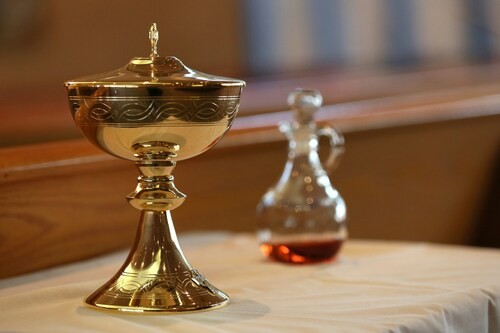
SACRAMENTAL
Anglican worship is centered on the sacraments, especially Baptism and Holy Eucharist, as visible signs of God’s grace. Through liturgical worship, prayer, and the rhythms of the Church calendar, Christians are formed over time into the likeness of Christ. Anglicanism believes worship is not merely expressive, but formative, shaping both the heart and the habits of God’s people week after week.

MISSIONAL
From its earliest days, Anglicanism has carried a vision of faithful presence in the world. Historic Anglican churches have sought to proclaim the Gospel, plant churches, serve their communities, and embody the goodness, beauty, and truth of Christ in everyday life. This mission is not only about gathering people into the Church, but also about being sent into neighborhoods, workplaces, and cities as witnesses to the kingdom of God.
ANGLICAN FAQ'S
WHEN DID ANGLICANISM APPEAR?
The Christian faith took root in Britain during the first centuries of the Church, likely through missionaries and merchants who brought the gospel to the British Isles. Over time, the Church developed within the diverse cultures of the region, including the Celtic, Roman, Anglo-Saxon, and other peoples who shaped its life and witness. From this rich heritage emerged many faithful leaders and missionaries, among them Saint Patrick, whose ministry helped spread Christianity throughout Ireland and beyond.
IS ANGLICANISM CATHOLIC? IS IT PROTESTANT?
Many describe Anglicanism as a "Reformed Catholic" tradition. We stand alongside other churches of the Reformation in affirming the supreme authority of Holy Scripture, while also preserving much of the worship, structure, and historic faith of the ancient Church. For this reason, Anglicans continue practices that have marked Christian worship from the earliest centuries, such as the weekly celebration of Holy Communion and the threefold ministry of Bishops, Priests, and Deacons.
WHAT IS THE HEART OF ANGLICANISM?
At its heart, Anglicanism is guided by a simple question: What is the faith once delivered to the saints and handed down by the apostles? We seek to be a church that is rooted in Scripture, shaped by the wisdom of the historic Church, and faithful to the apostolic witness. Our desire is not innovation for its own sake, nor tradition for tradition's sake, but a faithful participation in the life and faith of the one, holy, catholic, and apostolic Church.
WHY COMMON PRAYER?
One of the defining features of Anglicanism is its commitment to common prayer. Rather than every congregation creating its own forms of worship, Anglicans have historically worshiped using a shared liturgy rooted in Scripture and shaped by the faith of the historic Church.
For Anglicans, common prayer serves as a guardrail against making worship primarily about personal preferences or current trends. It roots us in the worship of Christians who have gone before us while continually immersing us in the language and story of Scripture. The goal is not rigid uniformity, but shared formation. We believe that as we pray together, God shapes us together into the likeness of Christ.
